Urea Price Europe 2026: Seasonal Trends, Drivers and Purchasing Recommendations
Urea is the most traded nitrogen fertilizer worldwide — and its price fluctuates significantly throughout the year. For European importers and distributors, timing is crucial for margin. This article provides an overview of seasonal price patterns and key market drivers.
How Urea Prices Are Formed
Urea (CO(NH₂)₂) is synthesized from natural gas and nitrogen. The natural gas price is therefore the most important cost factor in production.
The largest exporters are China, Russia, Egypt and the Middle East. European prices are closely linked to global FOB reference prices.
Seasonal Price Patterns
Highest prices: February to April — spring season drives European demand massively.
Slight softening: May to June.
Low points: July to September — often the best window for European importers to secure volumes.
Renewed rise: October to December — pre-covering for the spring season.
Market Drivers 2025/2026
Energy prices: European gas markets remain vulnerable to geopolitical risks.
Chinese exports: When China imposes export restrictions, global supply shrinks significantly.
Russian urea: Despite sanctions, Russian urea remains active on world markets.
EU demand: Stricter regulations may increase demand for stabilized urea products.
Granular vs. Prilled: Price Differences
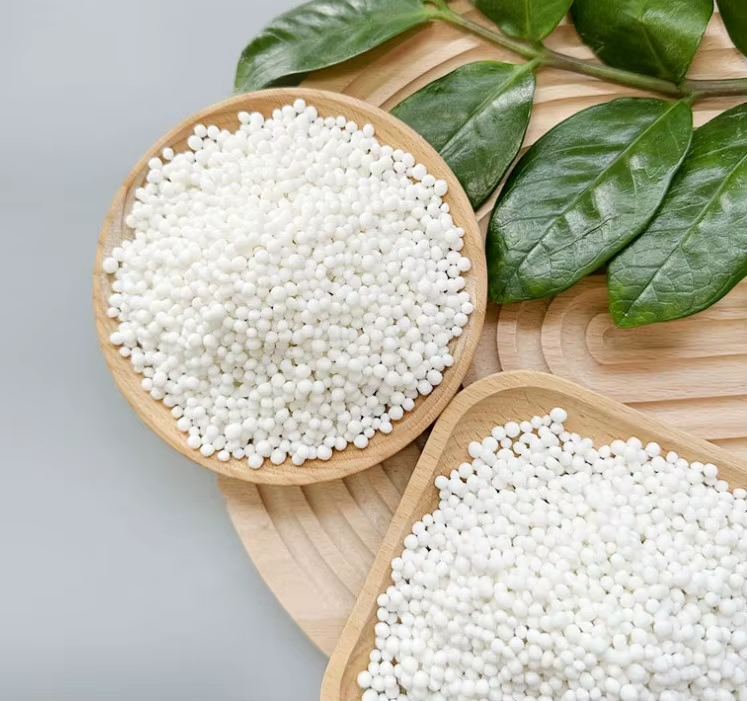
Granular urea has harder, larger particles (2–4 mm), better suited for spreaders, and typically commands a small premium.
Prilled urea is smaller (1–2.5 mm) and usually slightly cheaper.
For European importers: granular is the standard product.
Stabilized Urea: Worth the Premium?
Stabilized urea with NBPT urease inhibitor reduces ammonia volatilization by up to 70%.
Price premium: EUR 30–60/MT. A strategically important product for markets with strict N-emission regulations (UK, Netherlands, Germany).
Purchasing Recommendations 2026
Conclusion
Urea prices in 2026 will be driven by natural gas prices, Chinese export policy and European spring demand. Those who secure volumes in summer can buffer seasonal price peaks.
Cerantis offers timely quotes for granular and prilled urea qualities. Contact us.