Potassium Nitrate in Fertigation: chloride-free potassium and nitrogen for specialty crops
Potassium nitrate (KNO₃) is the potassium fertilizer of choice in irrigated specialty crops. It combines two properties that are decisive for fertigation and foliar feeding: full water solubility and complete absence of chloride. This article explains when potassium nitrate pays off, how to dose it, and how it differs from MOP and potassium sulphate.
Why potassium nitrate for fertigation?
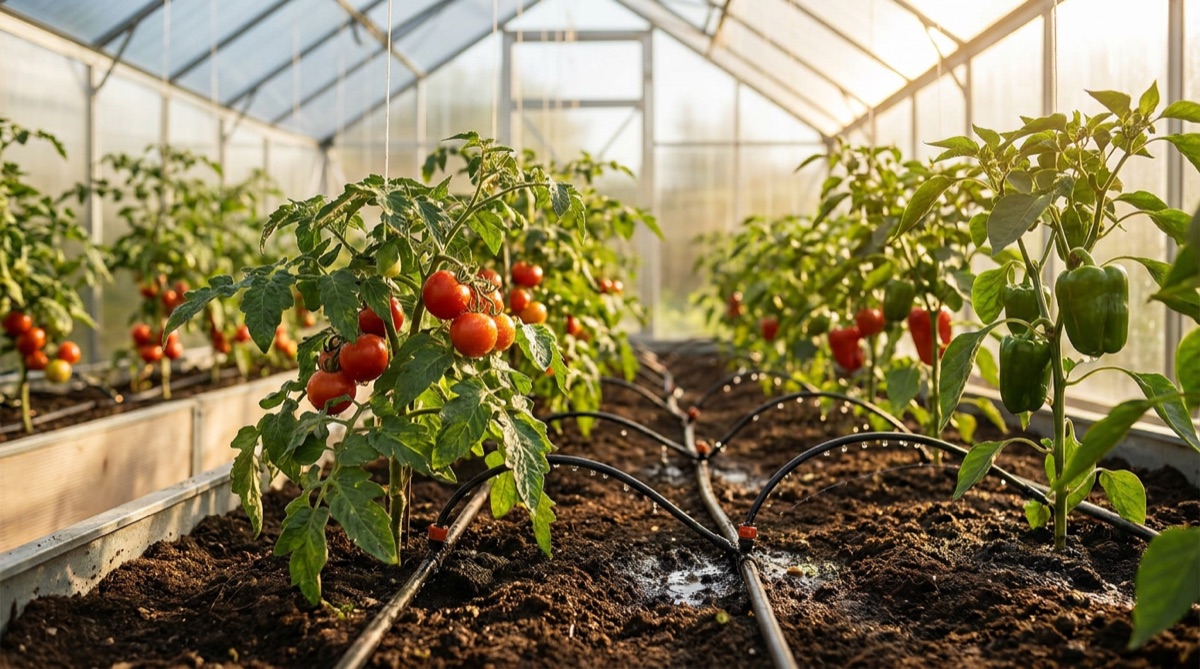
In drip irrigation and greenhouse production, what matters most is that a fertilizer dissolves without residue and does not clog the emitters. Potassium nitrate does exactly that: it is fully water-soluble and supplies immediately available nitrate nitrogen together with potassium.
A single component therefore covers much of the N and K demand of high-value crops – from greenhouse tomatoes, peppers and cucumbers to berries, vines and table grapes in the field.
Chloride-free: protecting quality-sensitive crops
The second major advantage is being chloride-free. Chloride reduces quality, starch content and storability in many crops. The most sensitive include:
Where MOP (potassium chloride) reaches its limits, potassium nitrate comes into its own.
Potassium nitrate vs. MOP vs. potassium sulphate
The three main potassium sources differ in price, solubility and accompanying nutrient:
| Product | Content | Chloride | Soluble | Use |
|---|---|---|---|---|
| MOP (potassium chloride) | 60% K₂O | yes | no (spreadable) | Broad-acre base dressing |
| Potassium sulphate (SOP) | 50% K₂O + 18% S | no | granular/soluble | Quality crops, sulphur demand |
| Potassium nitrate (KNO₃) | 13% N + 46% K₂O | no | fully soluble | Fertigation, foliar, greenhouse |
As a rule of thumb: MOP for broad base dressing, potassium sulphate for chloride-sensitive crops with a sulphur requirement, and potassium nitrate for fertigation and targeted feeding in critical phases.
Dosing and application
In fertigation, potassium nitrate is dissolved directly in the irrigation water and distributed across the crop’s growth and demand phases. For foliar feeding – e.g. to support fruit set or during stress periods – a concentration of 0.5–1% is typical.
Thanks to its high solubility it leaves no residue in the system. The exact rate depends on crop, target yield and soil analysis – we are happy to advise per crop.
Sourcing through Cerantis
Cerantis supplies potassium nitrate in soluble crystalline and prilled grades to European distributors and growers. The minimum order quantity for specialty fertilizers is 1 MT (subject to product availability and delivery location; CIF/FOB Europe). Related chloride-free potassium sources such as potassium sulphate (SOP) are also available.